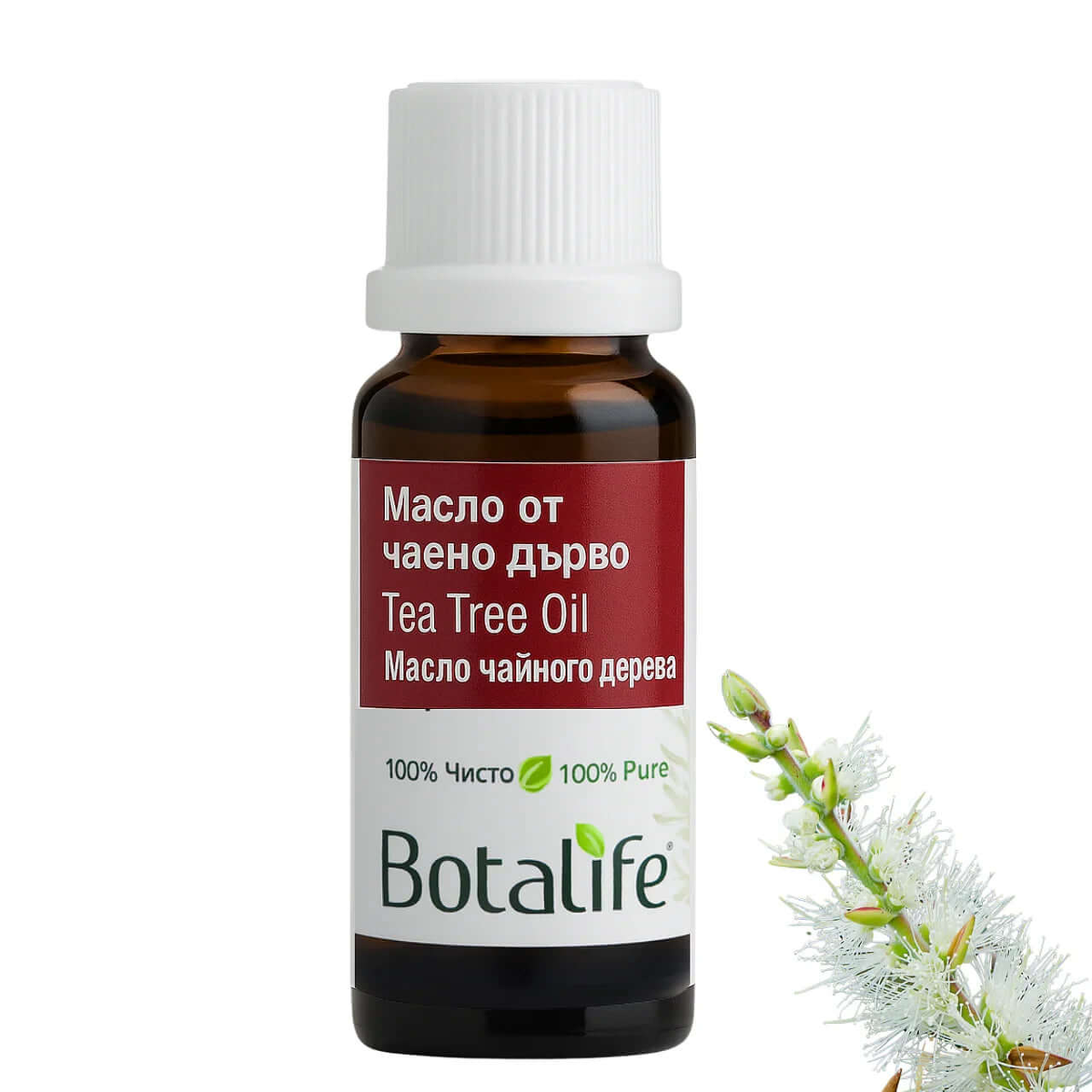
Tea tree oil comes from the leaves of Melaleuca alternifolia, a small tree native to Queensland and New South Wales, Australia. Although Melaleuca alternifolia is known as the tea tree, it should not be confused with the plants used to make black, green, or oolong tea.
Tea tree oil has been used as a traditional medicine by Aboriginal people for centuries. These native Australians would crush tea tree leaves to extract the oil, which was then inhaled to treat coughs and colds, or applied directly to the skin for healing.
Today, tea tree oil is widely available and has many uses. Tea tree oil contains a number of compounds, including terpinen-4-ol, which have been shown to kill certain bacteria, viruses, and fungi. Terpinen-4-ol also increases the activity of white blood cells, which help fight germs and fungi. These germ-fighting properties make tea tree oil a valuable natural remedy for treating bacterial and fungal skin conditions, preventing infection, and promoting healing.
Tea tree oil has bactericidal, antifungal, antiviral, and immunostimulating properties. Much like coconut oil for hair, tea tree oil has the ability to soothe scalp inflammation, prevent flaking, remove dandruff, and is used to treat lice.
Tea tree oil is used in medicinal preparations for all types of respiratory system ailments, such as colds, acute respiratory diseases, viral infections, laryngitis, and tonsillitis. It is also effective for colds due to its soothing and expectorant effects, clearing the airways of secretions and relieving the patient's condition.